
Getting new dentures is a big step! You are excited about your new smile, but you might also feel a little nervous about the adjustment period.
That is completely normal. Your mouth is about to get used to something new, and that takes time. At Premier Dental Care & Implant Centers, we want to make sure you feel supported throughout this journey. Our team, including Dr. Karim Naguib and our skilled specialists, has helped countless patients transition to life with dentures in Palmdale and Lancaster. We are here to guide you through every step.
Here is a week-by-week guide to what you can expect during your first 30 days with dentures.
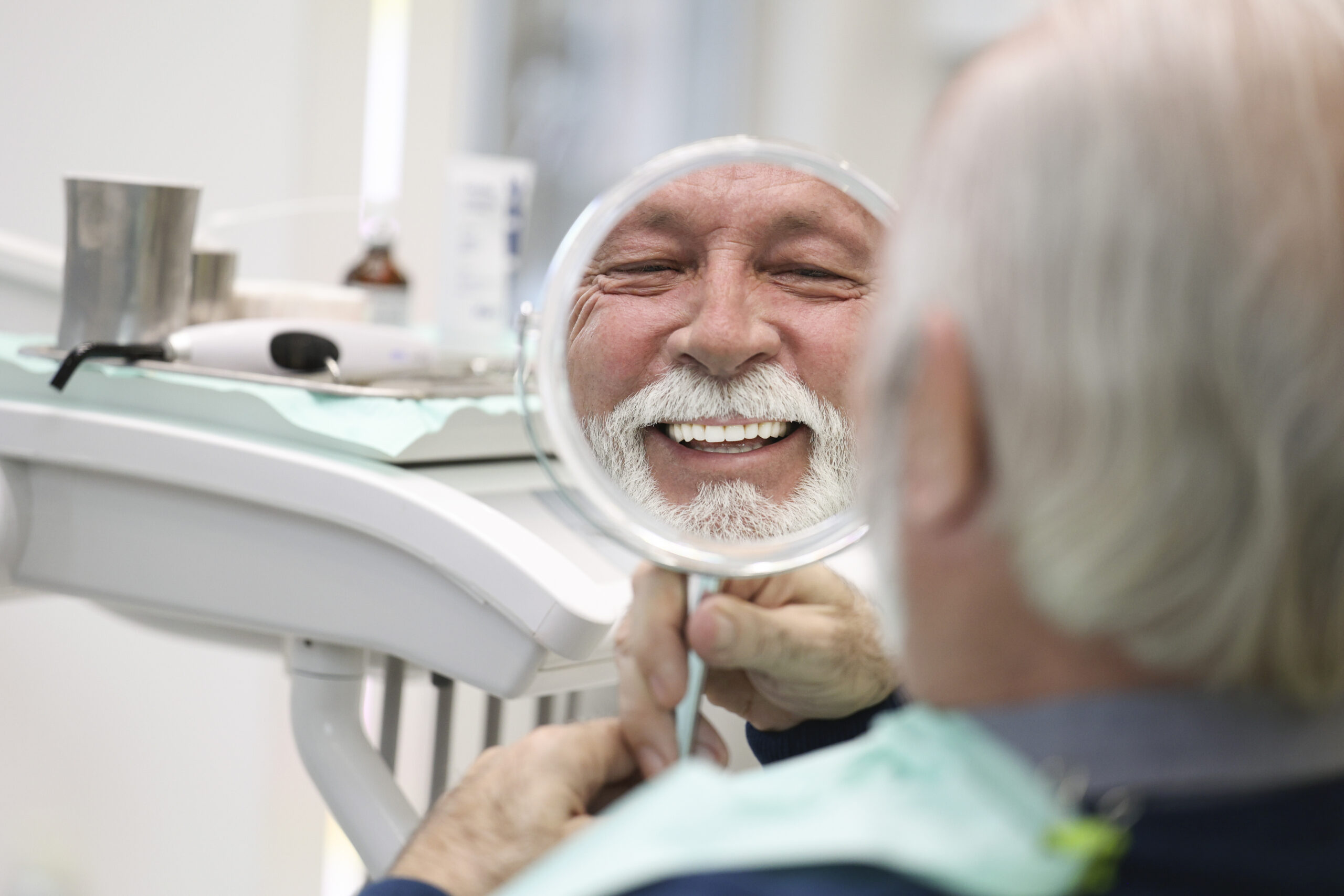
Week 1: Getting Used to the Feel of Dentures
The first week is the most challenging, but it’s also when your mouth begins to adapt. You might feel like your dentures are too big or don’t fit well. This is a common sensation. Your gums, cheeks, and tongue need time to learn how to work with them.
What to expect:
- Mild discomfort and sore spots: Your gums are healing, and some pressure points are normal. You might experience excess saliva during this time as your mouth reacts to the new appliance.
- Difficulty speaking: Your tongue and lips have to relearn how to move with dentures in place. You might notice a lisp or struggle with certain words.
- Changes in eating: Start with soft foods like mashed potatoes, yogurt, scrambled eggs, and soup. Chew slowly and evenly on both sides to help stabilize your dentures.
Our advice:
- Take it slow: Read aloud to practice speaking. Start with a few minutes a day and gradually increase your time. You will notice improvements quickly.
- Stick to soft foods: Give your gums a chance to heal. Avoid anything hard, sticky, or chewy.
- Ask for help: If the soreness persists, don’t try to fix it yourself. Call our office. A small adjustment from Dr. Naguib or one of our dentists can make a big difference in your comfort.
Week 2: Building Confidence and Improving Function
By the second week, your dentures will start to feel more like a part of you. The initial discomfort will begin to fade, and you will start to feel more confident in your new smile.
What to expect:
- Speech is improving: You will still have some challenges, but your pronunciation will be much clearer than in week one. Keep practicing.
- Eating is getting easier: You can begin introducing slightly firmer foods like cooked vegetables, pasta, and fish. Remember to cut food into small bites.
- Sore spots are healing: Your gums are adjusting, and any initial irritation should be improving.
Our advice:
- Keep practicing: Consistency is key. The more you talk and eat with your dentures, the faster your muscles will adapt.
- Maintain good hygiene: Even without natural teeth, clean your dentures daily. Use a soft brush and a non-abrasive cleanser. Rinse your mouth after meals and gently massage your gums to promote circulation.
- Monitor for slippage: If your dentures move slightly when you eat or talk, that’s because of muscle adaptation. However, if they feel loose or are causing significant discomfort, give us a call.
Week 3: Fine-Tuning Fit and Comfort
The third week is about fine-tuning. Your mouth is healing, but it’s still changing. This is a critical time to check in and make sure everything is fitting correctly.
What to expect:
- Continued improvement: You will notice a significant improvement in your comfort and confidence.
- Adapting to temperature and texture: You may start noticing subtle sensations again, like the temperature of food, which is a good sign that your oral tissues are healing.
- Saliva flow: Your saliva flow should return to normal levels by now.
Our advice:
- Schedule a follow-up: We recommend a check-up within the first month. This allows your dentist in Lancaster to check for pressure spots, make necessary adjustments, and ensure your bite feels balanced.
- Be patient: Some patients still need minor adjustments at this stage. That is completely normal.
Week 4: Feeling Like Yourself Again
By the end of the first month, your dentures should feel like a natural part of your mouth. You can eat, speak, and smile with confidence.
What to expect:
- Expanded diet: You can begin enjoying a wider range of foods. Focus on a balanced diet to support your overall health.
- Strengthened oral muscles: Your facial and jaw muscles have adapted, giving you better control and stability.
- Comfort and confidence: You are now ready to fully enjoy the benefits of your new smile.
Our advice:
- Maintain a consistent cleaning routine: Daily cleaning is essential for the longevity of your dentures and your oral health.
- Continue regular checkups: We will monitor your dentures’ fit over time to ensure they continue to serve you well.
The Premier Dental Care Difference
At Premier Dental Care & Implant Centers, we know that getting new dentures takes time. Our team of experienced family dentists, led by Dr. Karim Naguib, is committed to providing comprehensive, patient-focused care. We are proud to serve the Palmdale and Lancaster communities and help patients restore their smiles and confidence.
If you are considering dentures or need support adjusting to your new ones, we are here to help. Call our Lancaster location at (661) 948-6700, our East Palmdale location at (661) 273-6565, or our West Palmdale location at (661) 947-7777 to schedule an appointment. You can also request an appointment online anytime.