
Do you have a cracked tooth, a badly decayed tooth, or a missing tooth? Whatever the situation, you know you need to do something.
Your dentist mentions two options: a dental crown or a dental implant, and you’re not sure which one is right for you. This’s a common point of confusion. Crowns and implants both restore teeth, but they do very different things. Choosing the wrong one could mean unnecessary treatment or a result that doesn’t last as long as it should.
At Premier Dental Care & Implant Centers in Palmdale, Dr. Karim Naguib helps patients make this decision every week. He received his Doctor of Dental Surgery degree with honors in 2003 and completed a general practice residency from 2004 to 2005. He has been providing general, cosmetic, and restorative dentistry for over 20 years. Here’s an honest guide to help you choose.
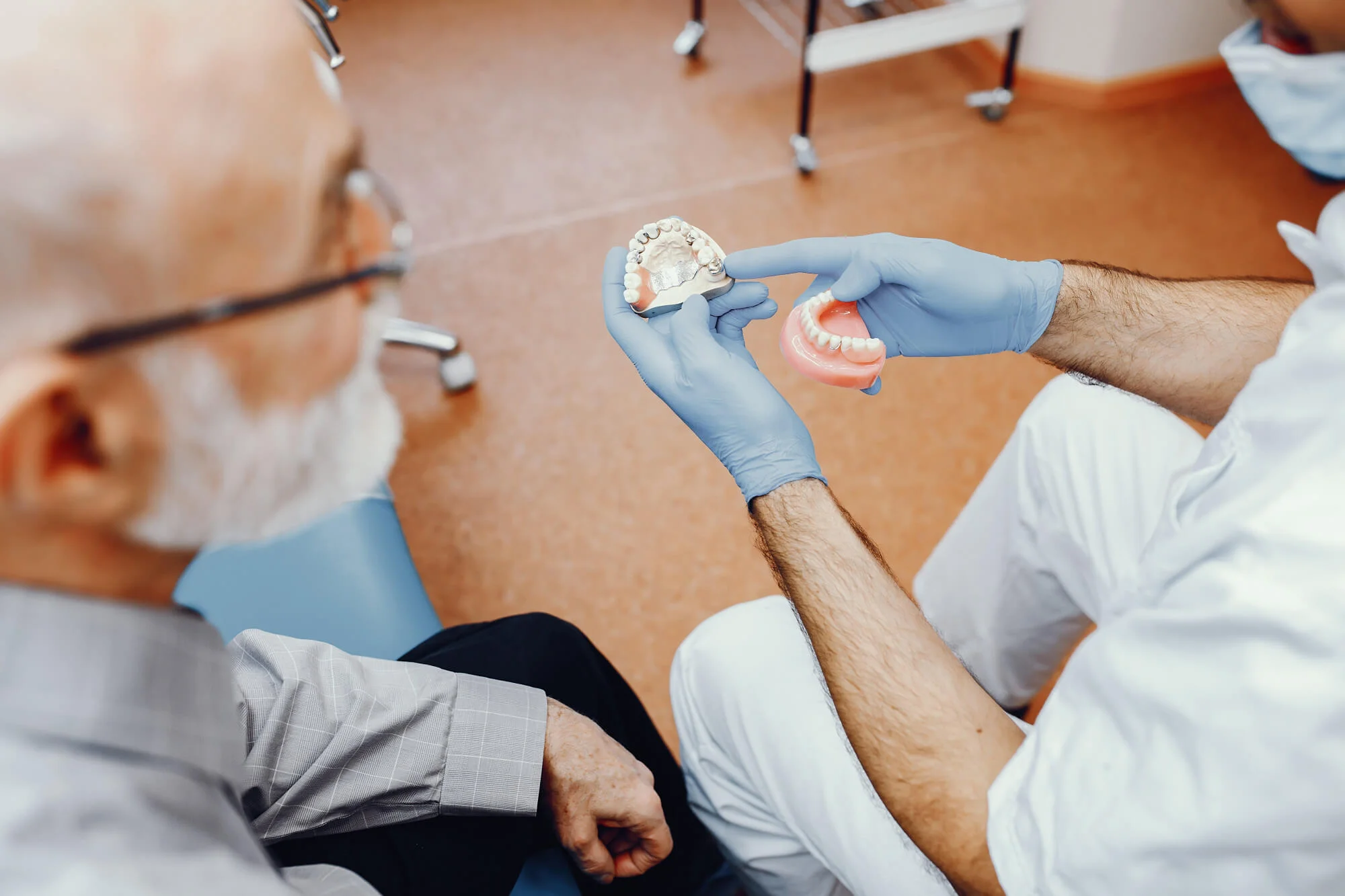
What Is a Dental Crown?
A dental crown is a cap that covers the entire visible portion of your tooth. It restores the shape, size, strength, and appearance of a damaged tooth.
Think of it like a helmet for your tooth. The tooth is still there underneath. The crown protects it and holds it together.
When a Crown Is Used
Crowns are recommended when a tooth is damaged but still salvageable. Common situations include:
- A tooth with a large cavity that can’t be fixed with a filling
- A cracked or fractured tooth
- A tooth that has had a root canal and needs protection
- A worn-down tooth from grinding
- A misshapen or discolored tooth that needs cosmetic improvement
- A tooth that will anchor a dental bridge
The Crown Procedure
Getting a crown typically involves two steps. First, we prepare the tooth by removing any decay and shaping it to fit the crown. Then we take digital impressions and design your crown.
At Premier Dental Care, we use CEREC technology to offer same-day crowns. This lets us design, mill, and place your crown in a single visit. No temporary crown or second appointment.
With proper care, a crown can last 10 to 15 years or longer. The key is good oral hygiene and regular dental visits. The tooth underneath also needs to stay healthy.
What Is a Dental Implant?
A dental implant is a titanium post that replaces the root of a missing tooth. We surgically place it into your jawbone. Over time, the bone fuses with the implant, creating a permanent foundation.
Once the implant is secure, we attach an abutment and a custom crown. The result looks and functions like a natural tooth.
When an Implant Is Used
Implants are recommended when a tooth is missing or needs extraction. Common situations include:
- A tooth that is too damaged to save
- A tooth that has been knocked out
- A tooth lost to severe decay or infection
- Multiple missing teeth that need replacement
- A full arch of missing teeth
The Implant Procedure
The implant process in our Palmdale office happens in stages. First, we evaluate your bone density with a CBCT 3D scan. Then Dr. Robert Sharobiem, our board-certified oral surgeon, places the implant post into your jawbone.
Over three to six months, the implant fuses with your bone. Then Dr. Naguib attaches the abutment and the final crown.
Implants are designed to last a lifetime. The implant post itself rarely fails. The crown on top may need replacement after 10 to 15 years due to normal wear, but the foundation stays.
The Key Difference
Here’s the simplest way to think about it. A crown saves a tooth that’s still there. An implant replaces a tooth that’s gone.
If you can save your tooth, a crown is usually the better option. It’s less invasive, faster to get, less expensive, and it preserves your natural tooth root.
If you can’t save your tooth, an implant is the gold standard. It replaces the entire tooth, including the root. It prevents bone loss, and it doesn’t affect your neighboring teeth.
Why Choosing Matters
The decision between a crown and an implant isn’t just about cost or convenience. It affects your long-term oral health. Here’s how:
- If You Choose a Crown When an Implant Is Needed: If the tooth is too damaged to support a crown, the crown will fail. The tooth may fracture further. You may end up needing an extraction and implant anyway. You’ll have spent time and money on a treatment that didn’t last.
- If You Choose an Implant When a Crown Would Work: Implants are more invasive and more expensive than crowns. If you can save your tooth with a crown, choosing an implant means unnecessary surgery, longer healing time, and a higher cost. You also lose your natural tooth root, which is always preferable to keep when possible.
Dr. Naguib evaluates each situation carefully. He doesn’t recommend implants when a crown will do. He doesn’t recommend crowns when a tooth can’t be saved. His goal is your long-term oral health.
How We Help You Decide
At Premier Dental Care, we don’t guess. We use advanced diagnostic tools to evaluate your tooth and make the right recommendation:
- Digital X-Rays: We take digital X-rays to see the structure of your tooth and the bone around it. This helps us determine if the tooth can be saved.
- CBCT 3D Scanning: For implant cases, we use CBCT scanning to evaluate bone density and plan the implant placement. This technology gives us a complete 3D view of your jaw.
- Comprehensive Exam: Dr. Naguib examines your tooth, gums, and bite. He checks for signs of infection and evaluates your overall oral health.
- Honest Discussion: Dr. Naguib explains what he sees and your options. He answers your questions and addresses your concerns. You’ll know exactly why he recommends one option over another.
The Team Behind Your Treatment
At Premier Dental Care, you have a full team of specialists under one roof. This matters for both crowns and implants.
- Dr. Karim Naguib, DDS: Dr. Naguib handles all crown procedures. He also handles the implant restoration phase, attaching the abutment and custom crown. He’s a member of the Academy of Implant Dentistry.
- Dr. Robert Sharobiem, DDS (Oral Surgeon): Dr. Sharobiem performs surgical implant placement. He ranked in the top 5% of his class at UCLA. He’s certified by the American Board of Oral & Maxillofacial Surgery.
- Dr. Farrah Yassi, DDS (Endodontist): If a tooth needs a root canal before a crown, Dr. Yassi handles it. She received her DDS from Stony Brook University and specialized in endodontics at USC.
- Dr. Marina Salib, DMD: Dr. Salib has advanced training in esthetics and same-day crowns. She can handle a wide range of restorative treatments.
This team approach means you don’t have to run from office to office. You get complete care in one place.
Serving Palmdale and the Antelope Valley
Premier Dental Care & Implant Centers has two Palmdale locations. Our East Palmdale office is at 3005 E Palmdale Blvd, Palmdale, CA 93550. Our West Palmdale office is at 1008 W Avenue M-14, Suite B, Palmdale, CA 93551. We proudly serve patients from Palmdale, Quartz Hill, Rosamond, and surrounding Antelope Valley communities.
Schedule Your Consultation
If you’re not sure whether you need a crown or an implant, let’s talk. Dr. Naguib and our team will evaluate your tooth, explain your options, and help you make the right choice.
Call our East Palmdale office at (661) 231-7031 or our West Palmdale office at (661) 947-7777, or request an appointment online.