
Do you have a cracked tooth or a large cavity? Has your tooth been sensitive for weeks? Your dentist has likely told you that you need a crown, but you’ve been putting it off.
The problem is, dental problems don’t wait; they get worse. What starts as a simple fix can become a complex, expensive problem if you ignore it.
At Premier Dental Care & Implant Centers in Palmdale, Dr. Karim Naguib sees this every week. Patients come in months after a crown was recommended. They wait until the tooth fractures further, the decay spreads, and the treatment plan changes. Here’s what happens when you wait.
The Progression: From Small Problem to Big Problem
Let’s walk through what happens when you delay a crown. Here is a step-by-step breakdown:
- The Tooth Is Compromised: Your dentist recommends a crown because the tooth is weakened, has a large cavity, is cracked, or has been worn down from grinding. The tooth needs protection. At this stage, a crown can save the tooth. The procedure is straightforward, the cost is predictable, and the outcome is good.
- The Crack Gets Bigger: If you wait, the crack or cavity grows. Every time you chew, you put pressure on the damaged tooth. The enamel around the damaged area is unsupported. It starts to fracture, and the tooth is now more vulnerable. The crown can still save it, but the procedure may be more involved.
- Decay Reaches the Pulp: If the damage reaches the pulp of your tooth, you now have an infection. The pulp contains nerves and blood vessels. When bacteria enter, it causes pain and swelling. You may feel throbbing pain and be unable to chew on that side. At this stage, a crown alone won’t fix it. You need a root canal first. Dr. Farrah Yassi, our endodontist, handles these cases. She received her DDS from Stony Brook University and specialized in endodontics at the University of Southern California. Her advanced training ensures your root canal is done right.
- The Tooth Fractures Beyond Repair: If the crack extends into the root, the tooth can’t be saved. Extraction becomes the only option. Dr. Robert Sharobiem, our board-certified oral surgeon, handles the extraction. He ranked in the top 5% of his class at UCLA. He’s certified by the American Board of Oral & Maxillofacial Surgery.
- You Need an Implant: Once the tooth is extracted, you have a gap. That gap needs to be filled. If you don’t replace the tooth, your remaining teeth shift. Your bite changes and your jawbone shrinks. Dr. Sharobiem places a dental implant. Dr. Naguib restores it with a custom crown. The process takes months. The cost is significantly higher than the original crown would have been.
The Financial Cost of Waiting
Let’s talk about money because this is where waiting really hurts:
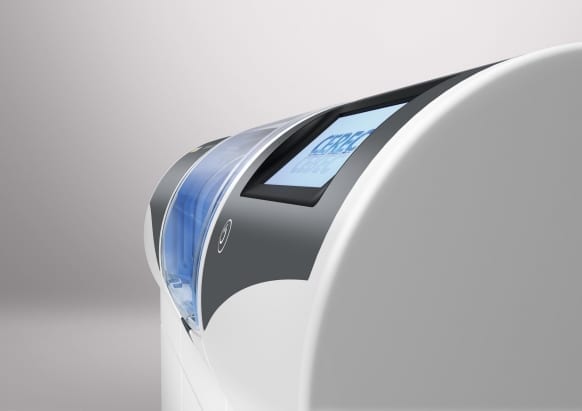
- Fixing It Early: If you get a crown now, the treatment is predictable. Dr. Naguib uses CEREC technology to create same-day crowns in a single visit. The cost is lower than a more complex treatment plan, and you save your natural tooth.
- Fixing It Later: If you wait and the tooth needs a root canal, the cost goes up. You’re now paying for the root canal plus the crown. If you wait even longer and the tooth needs extraction, the cost goes up again. You’re now paying for the extraction plus an implant plus the implant crown.
Each stage costs more than the one before.
The Time Cost of Waiting
It’s not just about money because time is of the essence. A simple crown takes one visit at our Palmdale office. You come in. We prepare the tooth, design the crown, mill it in-house, and place it. You leave with a permanent restoration.
If you wait until you need a root canal, that’s an additional appointment. If you wait until you need an extraction and implant, that’s multiple appointments over several months. The implant needs to heal. The bone needs to fuse. The final restoration comes later.
What could have been a single visit becomes a months-long process.
The Health Cost of Waiting
And it’s not just about money and time. It’s about your health:
- Infection Spreads: An untreated dental infection can spread. It can affect your gum tissue, your jawbone, and even your bloodstream. In severe cases, it can be life-threatening.
- Bone Loss Accelerates: When a tooth is missing, the jawbone no longer receives stimulation. It starts to break down. This happens quickly. If you wait too long, you may need bone grafting before you can get an implant.
- Bite Problems Develop: When a tooth is damaged or missing, your bite changes. Other teeth shift. You may develop jaw pain, headaches, and TMJ disorders.
- Your Overall Health Suffers: Research shows a connection between oral health and systemic health. Untreated dental problems are linked to heart disease, diabetes, and other conditions.
Why the Right Team Matters
At Premier Dental Care, our team can handle every stage of treatment. Whether you need a simple crown or a complex implant, we do it all.
- Dr. Karim Naguib, DDS: Dr. Naguib handles crown procedures. He uses CEREC technology to create same-day crowns. He received his DDS with honors in 2003 and completed a general practice residency. He’s a member of the Academy of Implant Dentistry.
- Dr. Farrah Yassi, DDS (Endodontist): If a tooth needs a root canal, Dr. Yassi handles it. Her advanced training from USC means your root canal is done right.
- Dr. Robert Sharobiem, DDS (Oral Surgeon): If a tooth needs extraction or an implant, Dr. Sharobiem handles it. He’s board-certified and has advanced training in reconstruction and facial trauma.
- Dr. Marina Salib, DMD: Dr. Salib graduated from Rutgers School of Dental Medicine, where she was recognized as one of the top students in her class. She has advanced training in esthetics and same-day crowns.
This team approach means you don’t have to run from office to office. You get complete care in one place.
Don’t Wait Until It’s Too Late
A crown today is simpler, faster, and less expensive than a root canal, extraction, or implant tomorrow. It saves your natural tooth, which is always preferable to losing it.
Call Premier Dental Care & Implant Centers today. Our Palmdale team is ready to help. We’ll evaluate your tooth, explain your options, and fix the problem before it becomes a bigger issue.
Call our East Palmdale office at (661) 231-7031 or our West Palmdale office at (661) 947-7777, or request an appointment online anytime.