
If your teeth are crooked, crowded, or have gaps, you’re not alone. This common condition is called malocclusion, or simply, a “bad bite.” While very minor issues might be fixed with procedures like bonding, many people need a more complete solution to straighten their teeth for good.
For adults and teens, clear aligners like Invisalign have become a popular choice. They offer a nearly invisible way to improve your smile without metal brackets and wires. But it’s important to know that Invisalign isn’t the perfect fit for every person or every smile.
The best way to know if it’s right for you is a conversation with your dentist. They’ll look closely at your oral health, discuss your daily habits, and help you decide if clear aligners are your path to a straighter smile, or if another option might work better.
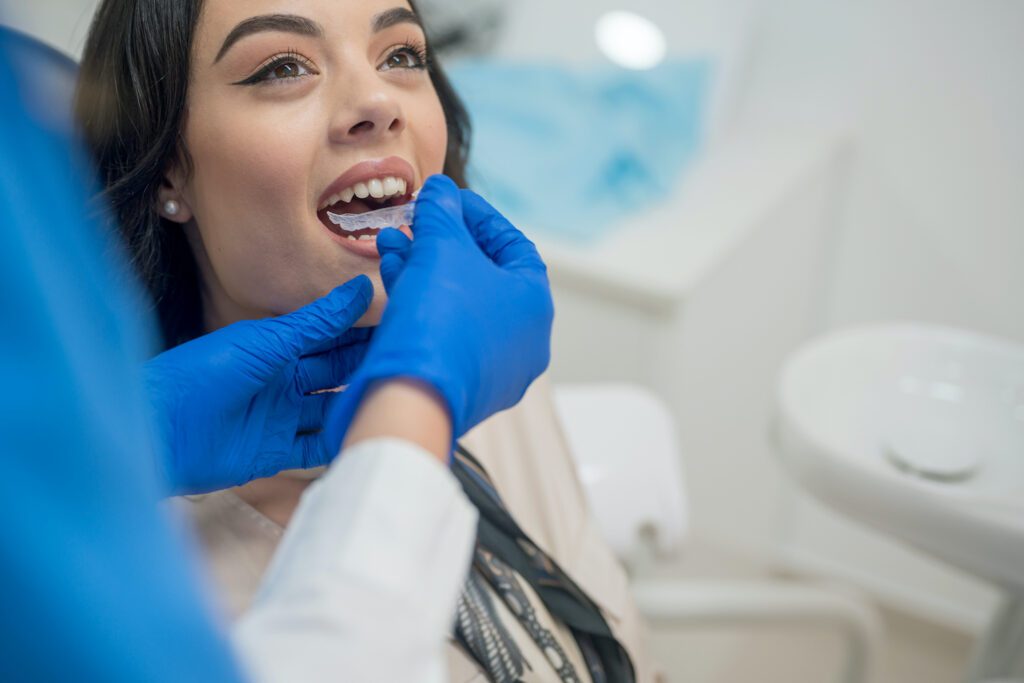
What Could Affect Eligibility for Invisalign in Palmdale, CA?
While Invisalign has helped millions, it’s not a one-size-fits-all treatment. For some patients, traditional braces or other orthodontic appliances are still the most effective choice. Braces might seem less convenient, but they offer powerful control that can be necessary for certain cases.
Your dentist or orthodontist will consider a few important factors before recommending Invisalign. Let’s break down what might affect your eligibility.
1. The Complexity of Your Case
Invisalign excels at treating mild to moderate alignment issues. These include crowding, spacing, and certain types of overbites or underbites. The treatment works with a full series of custom-made plastic trays, each one moving your teeth a tiny step.
Because the entire plan is mapped out and created in advance, it’s harder to make big changes mid-treatment. For very complex cases, traditional braces often give the orthodontist more precise control to get the best result. For example, like when a tooth needs to be rotated significantly or moved a large distance.
2. Your Daily Oral Hygiene Routine
One of the biggest perks of Invisalign is that you can remove the aligners to eat and drink. This means no food restrictions! However, it comes with a crucial responsibility. You must brush and floss your teeth after every meal or snack before putting the aligners back in.
If food particles and plaque get trapped against your teeth under the aligner, it dramatically increases your risk for cavities and gum inflammation. For individuals who may struggle with a consistent hygiene routine, the fixed structure of traditional braces can sometimes make professional cleanings easier and protect overall dental health during treatment.
3. Your Current Dental Health
Your starting point matters. Existing dental work or conditions can play a role in the decision:
- Dental Implants: Unlike natural teeth, implants are fused to your jawbone and can’t be moved. If an implant is in the path of where teeth need to shift, Invisalign might not be feasible, or the treatment plan would need to be designed very carefully around it.
- Gum Disease (Periodontitis): Active gum disease causes bone and tissue loss, making teeth less stable. Teeth need a healthy foundation to move safely. Any gum disease must be treated and under control before starting any orthodontic treatment, including Invisalign.
- Crowns and Bridges: These can be moved with Invisalign. But they may require special attachments to help the aligners grip properly.
Your dentist will examine everything in your mouth to ensure a safe and effective plan.
Your Invisalign Questions, Answered Simply
Can I get Invisalign if I had braces as a kid?
Yes, absolutely. Teeth often shift back over time—a process called relapse. Invisalign is a very common and discrete way to correct these minor shifts and get your smile back on track without needing full metal braces again.
Will I talk funny with Invisalign aligners in?
You might notice a very slight lisp for the first day or two as your tongue adjusts to the new aligners. This is completely normal and almost always goes away quickly as you get used to speaking with them. Most people adapt within a week.
Can any dentist do Invisalign?
No. Dentists and orthodontists must undergo specific training and be certified by Invisalign to offer the treatment. It’s important to choose a provider with experience, like the team at Premier Dental Care, who can show you examples of their successful cases.
Can I take the aligners out for a big event, like a wedding or important speech?
Yes, that’s one of the key benefits! You can remove them for special occasions. The rule is to wear them for 20 to 22 hours per day for the treatment to stay on schedule. Just remember to put them right back in afterward. Taking them out too often will delay your progress.
Do you have to wear Invisalign forever?
No, the active treatment phase has an end date. However, to keep your teeth in their new positions, you will need to wear a retainer afterward. Retainers are typically worn full-time for a few months, then just at night. Your dentist will give you a clear plan to maintain your beautiful, straight smile for life.
Finding Your Best Path to a Straighter Smile
The goal is a healthy, confident bite that’s easier to clean and lasts a lifetime. Whether that’s achieved through Invisalign or another excellent orthodontic option depends on your unique smile.
At Premier Dental Care in northern Los Angeles County, CA, we believe in providing honest, personalized recommendations. We offer a range of solutions because we know every patient is different.
Ready to explore your options? Call our Palmdale or Lancaster dental office to schedule your orthodontic consultation. Let’s discuss your goals and find the right path to the straight, healthy smile you deserve.